Key Perspectives and Assessments Highlighted at the Panel
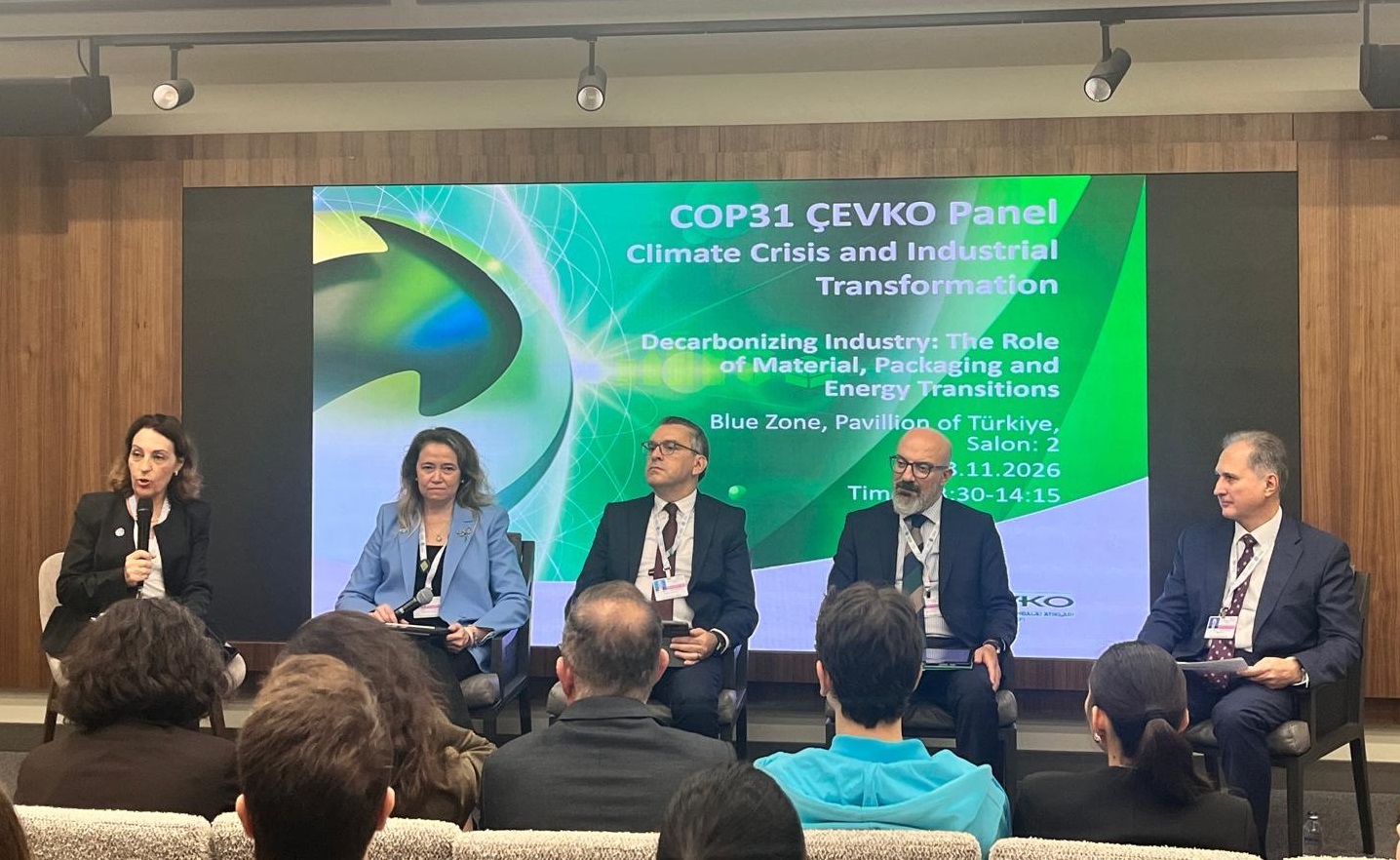
The session, moderated by Esra İren, Vice Chair of the ÇEVKO Foundation Board of Directors, featured Dr. Betül Türel Erbay, Chief Innovation and Sustainability Officer at Korozo Group; Levent Kavuncu, HSE and Sustainability Director at Fiba Renewable Energy; Çetin Yılmaz, Senior Corporate Affairs Manager at Unilever; and Mete İmer, Secretary General of the ÇEVKO Foundation, as speakers.
Material Innovation, Design and Scope 3 Management
Dr. Betül Türel Erbay, Chief Innovation and Sustainability Officer at Korozo Group, stated that industrial decarbonization requires transforming not only the energy used but also the materials selected and the products designed. Noting that packaging sustainability cannot be measured solely by recycling performance, Erbay highlighted a life cycle approach encompassing product safety, shelf life, food waste prevention and post-use management. She emphasized that circularity begins not when packaging becomes waste, but with material selection and product design.
Noting that the European Union’s Packaging and Packaging Waste Regulation (PPWR) is accelerating the transition, Erbay stated that mono-material structures and the use of recycled content must be evaluated alongside technical performance and commercial feasibility. She explained that factors such as recycled material availability, quality, traceability, infrastructure and cost make industrial-scale implementation challenging. Pointing out that Scope 3 emissions account for approximately 89 percent of Korozo’s greenhouse gas inventory, Erbay emphasized the importance of collaboration and measurable carbon reductions across the value chain.
Renewable Energy, Electrification and Net Zero Targets
Levent Kavuncu, HSE and Sustainability Director at Fiba Renewable Energy, announced that the company aims to achieve net zero emissions across its entire value chain by 2040. Kavuncu stated that the company has an installed capacity of 742 MW in Türkiye, with 10 wind, five solar and four hybrid power plants, and aims to reach 1,000 MW by 2030 through capacity expansions in Türkiye and new projects in Romania and Moldova.
Stating that they are the first energy company with a 100 percent renewable energy portfolio whose net zero commitment aligned with the 1.5°C target has been validated by the Science Based Targets initiative (SBTi), Kavuncu explained that they aim to reduce Scope 1, 2 and 3 emissions by 42 percent by 2030 compared to 2023 levels. He noted that in 2025, the company met all its electricity needs from renewable sources, reduced Scope 1 and 2 emissions by approximately 80 percent, and generated around 200,000 MWh through solar capacity at hybrid facilities, contributing to the prevention of 123,000 tonnes of carbon dioxide equivalent emissions. He also stated that they support industrial decarbonization through I-REC certificates, Gold Standard and Global Carbon Council carbon credits.
Extended Producer Responsibility (EPR) and the Circular Economy
Çetin Yılmaz, Senior Corporate Affairs Manager at Unilever, stated that producers should take responsibility for the collection, sorting and recycling of the packaging they place on the market, expressing their support for mandatory and well-designed EPR systems. He emphasized that infrastructure, traceability, quality standards, incentives and verification mechanisms must work together to ensure an effective system.
Explaining that they have been working to develop the supply of post-consumer recycled (PCR) plastics in Türkiye since 2019, Yılmaz stated that recycled plastics are used in the Omo, Cif, Domestos and Clear brands and that packaging has been simplified through eco-design projects since 2024. Noting that their voluntary collection experience with ÇEVKO between 2022 and 2025 demonstrated that individual company initiatives alone could not achieve sufficient scale, Yılmaz stated that strong collection and recycling systems, alongside compliance with EU regulations, would create a competitive advantage in circular production.
Mete İmer, Secretary General of the ÇEVKO Foundation, stated that the foundation, established in 1991, operated as an authorized recovery organization between 2005 and 2020, working with approximately 160 municipalities and 5,000 companies across 30 provinces and contributing to the recycling of 7.5 million tonnes of packaging waste. Noting that they are working to reimplement the EPR model by drawing on Türkiye’s 15 years of experience, İmer highlighted the importance of eco-modulation, deposit return systems, green procurement and competitive recycling markets in the stages of sustainable production, sustainable consumption and upcycling. Stating that EPR implementation contributed to preventing approximately 2 million tonnes of carbon dioxide emissions during its final five years, İmer emphasized the need for traceable and verifiable data through digital systems and QR codes.
Moderator Esra İren stated that circularity begins with design and can be completed through effective collection, sorting and recycling systems, emphasizing that industrial decarbonization is possible through collaboration across institutions and sectors.
Frequently Asked Questions (FAQs)
- Question: When and where was the ÇEVKO Foundation panel held as part of COP31?
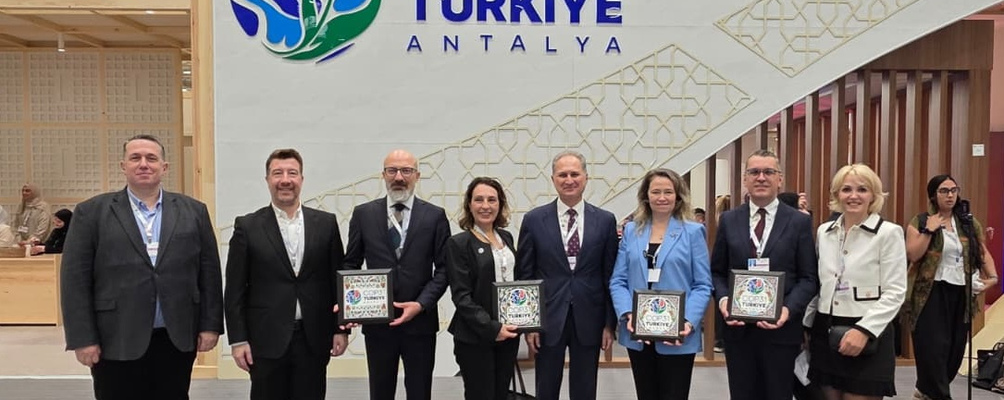
- Answer: The panel was held on November 18 as part of COP31 at the Türkiye Pavilion in the Blue Zone in Antalya.
- Question: What common emphasis was placed on Extended Producer Responsibility (EPR) during the panel?
- Answer: It was emphasized that EPR should be supported by infrastructure, traceability, quality standards, incentives and verification mechanisms, and that it strengthens waste management and the supply of recycled raw materials within the circular economy.
- Question: Where can the panel recording be accessed?
- Answer: The panel recording can be viewed via the relevant session link published on the COP31 YouTube channel.